
The Expanding Role of Neuromodulation: A Platform for Unmet Clinical Needs

One patient struggles for decades with unresolved depression. Each new treatment holds promise – some even work for a short while – but before long, he winds up in the same spot. Another patient has sustained injuries that have rendered her paralyzed from the neck down, leaving her with little hope at all.
Used to control the symptoms of Parkinson’s disease, epilepsy, and other movement disorders for nearly 40 years, neuromodulation has been advanced even further by bold investments in research and clinical care at UT Southwestern Medical Center’s Peter O’Donnell Jr. Brain Institute. Today, the therapy is emerging as a solution for patients who have exhausted conventional treatments and for whom new therapeutic options are urgently needed. The evidence suggests that neuromodulation is not just a therapy for one condition, but a promising platform with expanding applications across some of medicine's most complex conditions, representing a new era in neurotherapeutics.
Advancing depression care
Mark Slaughter had access to the best behavioral health treatments, but each new plan fell short. As a teenager, he barely slept and began slipping into a major depression. Medication eventually helped him pursue a promising career and lead a full life, but the depression returned in his 30s. Another medication provided temporary relief until it stopped working and caused a full relapse. From there, he tried electroconvulsive therapy (ECT), which allowed him to return to work, earn a good living, and socialize with friends. However, it wasn’t long before ECT joined the list of treatments that failed, leaving him back at square one.
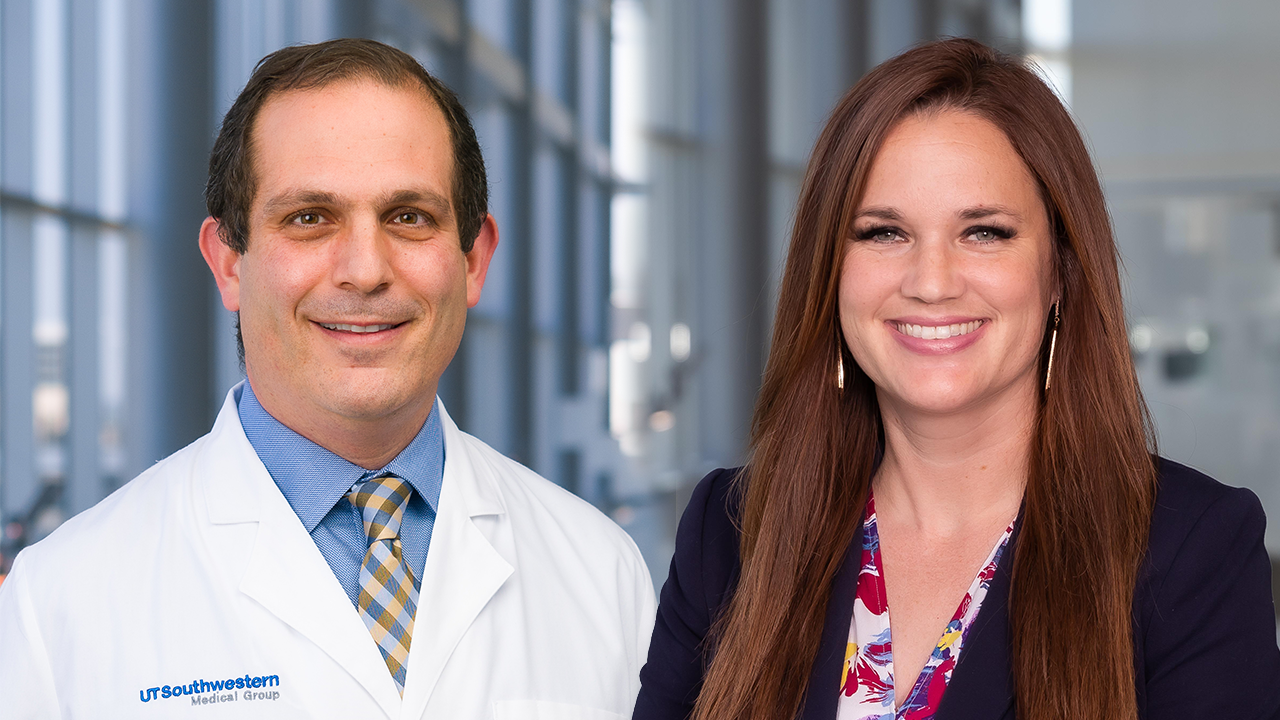
Nader Pouratian, M.D., Ph.D. and Kala Bailey, M.D.
In 2024, Nader Pouratian, M.D., Ph.D., Chair of Neurological Surgery, and Kala Bailey, M.D., Executive Clinical Director of the Neuroscience Service Line – who also holds an appointment in the Department of Neurological Surgery – invited Mr. Slaughter, now in his 60s, to join a clinical trial at UT Southwestern involving deep brain stimulation (DBS), a form of neuromodulation.
The surgical team implanted four electrodes into premapped areas of his brain and two half-dollar-sized power packs under the skin just below his collarbones. The system, implanted by Dr. Pouratian, delivers constant therapeutic stimulation and course-corrects abnormalities in brain activity that may contribute to depressive symptoms. For Mr. Slaughter, the results were immediate.
“I often liken it to having an abnormal rhythm in the brain, and just like an arrhythmic heart might require a pacemaker, the brain of someone with a movement disorder or neuropsychiatric illness can also be treated with a type of pacemaker,” Dr. Pouratian said. “We’ve been really fortunate that DBS works so well for movement disorders, and we’re starting to see it treat other neurological diseases just as successfully.”
In addition to major depression, obsessive-compulsive disorder (OCD) and schizophrenia are also being treated with DBS, representing a more targeted approach for psychiatric conditions that have limited viable treatment options.
Restoring physical function
In patients with paralysis resulting from spinal cord injury, amyotrophic lateral sclerosis (ALS), or brainstem stroke, neuromodulation approaches are demonstrating the potential to reestablish communication between the nervous system and the body. Ceci Verbaarschot, Ph.D., Assistant Professor of Neurological Surgery and Biomedical Engineering, has developed a brain-machine interface (BMI) designed to restore sensation and movement in the upper limbs of people paralyzed from the neck down. She is one of several UT Southwestern faculty members focused on neuromodulation therapies that integrate neuroscience, artificial intelligence, and biotechnology to study the mechanisms of touch and movement.
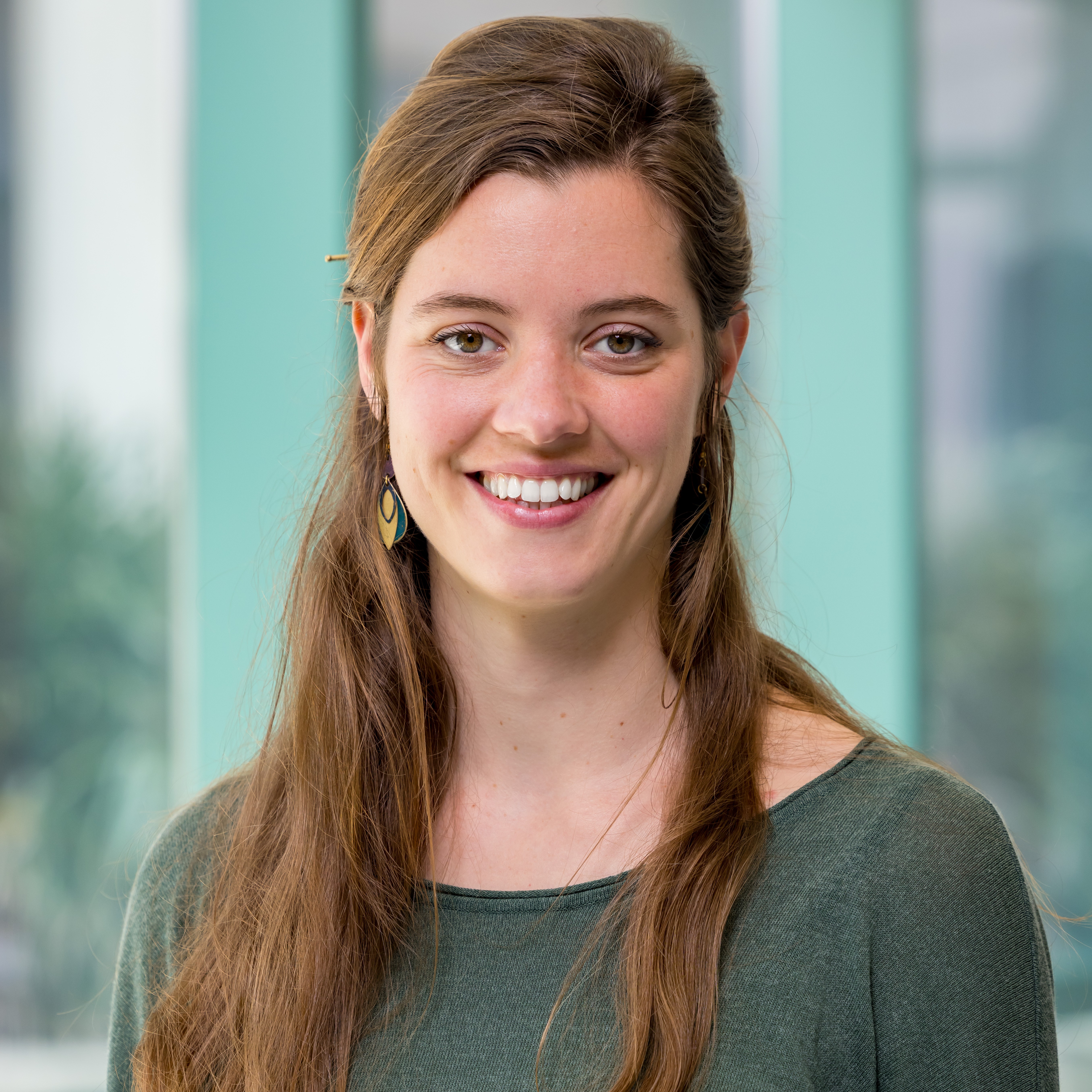
Cecile Verbaarschot, PhD
In clinical trials, the goal is to record and stimulate electrical signals using small brain implants known as NeuroPort arrays. Developed by Blackrock Neurotech, the arrays are implanted in the brain tissue of patients with paralysis to help researchers capture movement intentions while restoring physical sensation.
“With sensors implanted and connected to a BMI, we can not only read information sent by the brain but also stimulate the part of the brain that normally receives touch information from the skin,” said Dr. Verbaarschot. “If you stimulate that part of the brain directly, it feels like you have something touching your hand even though you may have lost all sensation there.”
This builds on Dr. Verbaarschot’s previous research at the University of Pittsburgh, where she developed a Guitar Hero-like game that enabled participants to “play” the strings via imagined finger movements and feel which string they were playing via a BMI that allowed for intracortical stimulation of their brains.
“We created a kind of bidirectional embodied system so that patients can both control what strings are being played on the virtual guitar and receive the signals in their brains that made it feel like they are actually strumming the instrument,” she said.
A promising path forward
The promise of neuromodulation lies in its ability to address what many of these conditions have in common: disrupted neural circuits. From treatment-resistant depression to paralysis caused by neurological injury, advances in neuromodulation are demonstrating that the same technologies and techniques can be adapted to address what might first appear to be vastly different clinical challenges.
“The appeal of neuromodulation is that it moves us beyond the ‘poke and hope’ strategy that so often characterized early interventions with the brain,” Dr. Pouratian said. “We knew much less about the brain than we do today, and neuromodulation has demonstrated our ability to precisely target areas of the brain where stimulation can quickly and painlessly bring about healing.”
For the estimated 50 million people worldwide living with neurodegenerative conditions – and millions more affected by complex neurological and psychiatric disorders – the path forward will depend on continued collaboration among neurologists, neurosurgeons, psychiatrists, engineers, researchers, and rehabilitation specialists. Through the multidisciplinary innovation already underway at UT Southwestern, neuromodulation is moving beyond a treatment for individual diseases to become a platform for restoring function, improving quality of life, and redefining what is possible.
Dr. Pouratian also serves as a Professor of Neurology. He holds the Lois C.A. and Darwin E. Smith Distinguished Chair in Neurological Surgery.
Dr. Bailey holds the Drs. Anne and George Race Professorship of Student Psychiatry.