
Neurology’s Undefined Cases: The Service That Solves Them

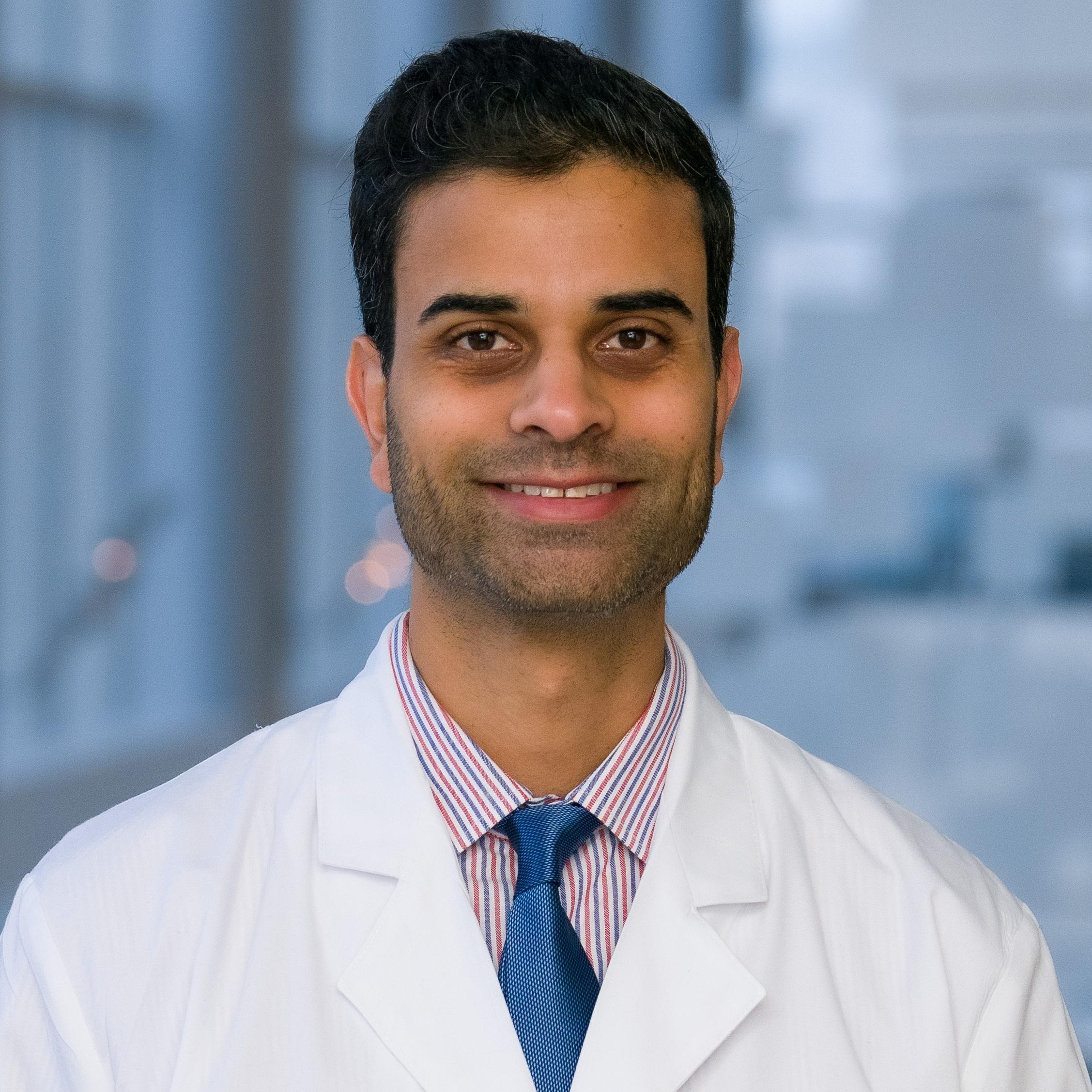
Anik Amin, M.D.
Assistant Professor of Neurology
Peter O’Donnell Jr. Brain Institute
UT Southwestern
It is not uncommon for patients to turn to UT Southwestern Medical Center after experiencing rapid functional decline and a preliminary diagnosis that just doesn’t align with their symptoms. One case in point: In a matter of weeks, a patient lost the ability to walk and perform basic daily activities important to quality of life. A visit to an outside hospital resulted in the discovery of a spinal cord mass and a suggestion that it might be cancerous, but offered little clarity beyond that. Seeking definitive answers, the patient’s family brought him to UT Southwestern for a second opinion. Their instincts were right, and soon the path to healing was in sight.
“Believe it or not, this is quite common,” said Anik Amin, M.D., Assistant Professor of Neurology at the Peter O’Donnell Jr. Brain Institute at UT Southwestern and a neurohospitalist with services at both William P. Clements Jr. University Hospital and Parkland Memorial Hospital. “When other places can’t pinpoint solutions, these complex clinical cases show up here. And with our commitment to quality and interdisciplinary care, we can solve the mystery and see improvements.”
An interdisciplinary approach
What was interesting to Dr. Amin in this case is that the patient began improving even before the team delivered the definitive treatment. With UT Southwestern’s excellent nursing and physical therapy care and optimization of the medication list, the patient immediately began improving. Those seemingly small interventions primed the patient for maximum recovery with definitive treatment. They also served as a reminder that when fundamental measures are paired with a coordinated, interdisciplinary approach, even the most complex or elusive medical conditions can be addressed.
With the patient already on a better track, Dr. Amin’s team broadened the diagnostic lens. A spinal lesion raised the possibility of cancer, but other explanations – infectious or autoimmune — were equally plausible given the patient’s history. The neurology team engaged with other specialties to ensure no avenue was overlooked. A comprehensive workup, including lumbar puncture, advanced imaging, and targeted laboratory testing, began to clarify the true nature of the condition.
“We didn’t want to prematurely jump to treatment because one treatment could help one thing but worsen another. For example, steroids could worsen an infectious issue, but help if it was autoimmune,” Dr. Amin explained.
The patient, in his 60s, was ultimately diagnosed with neurosarcoidosis, an autoimmune/inflammatory disorder. With targeted treatment and comprehensive rehabilitation, he was able to regain his mobility and return to walking.
Dynamic teaching environment
Dr. Amin and his team manage all the neurology cases at UTSW that – like this patient – don’t fall neatly into stroke, ICU, or epilepsy protocols.
“We’re the service that takes on the unclear, atypical, and complex cases – the patients who arrive with symptoms no one has quite figured out yet,” he said.
Every day, neurohospitalists like Dr. Amin put their investigative skills to work, trying to unravel the cause of the symptoms and determine possible treatment options. This variety and complexity of cases is one of the reasons Dr. Amin was attracted to neurohospitalist medicine. But the collaboration and continuous learning is highly rewarding as well.
“What’s most rewarding is the chance to work closely with trainees, physicians from other specialties, and other parts of the health care team. Our interdisciplinary approach and teaching environment is incredibly satisfying,” Dr. Amin said. “And because our cases are rarely routine, every day brings something different – which makes the work both rewarding and consistently challenging.”
This is also a draw for residents – from Texas as well as across the globe – who gain unique exposures for their careers. Beyond clinical neurology, training emphasizes quality, safety, efficiency, and cross-team collaboration. So residents learn not just neurology, but also how to function as effective hospital-based clinicians in a highly dynamic environment.
“They learn how to work in an interdisciplinary team and how to be a high-quality provider in our system,” Dr. Amin said.
A typical day treating atypical cases
On an average clinical day, Dr. Amin might start fielding calls – usually for an emergency room case – the moment he wakes up. Once at work, he may first see the routine cases with well-established plans. The most important part of his day starts midmorning when he makes rounds with trainees while caring for and counseling patients. Cases range the gamut, from the common but urgent to the highly unusual and complicated.
“Anything with a good teaching point, I’ll see with trainees, whether it be to teach important exam findings or discharge counseling pearls,” he said.
Part of the focus is on quality improvement research with residents. Past projects include improving emergency department headache and dizziness management as well as lowering the need for one-on-one patient observers – or “sitter use” – through better protocols. This helps staffing efficiency and resource allocation. Trainees on the team often draft case reports whenever they find interesting cases that are not well reported in literature. The inpatient team also often identifies patients suitable for outpatient research studies run by subspecialists within UT Southwestern’s Neurology Department.
Optimizing outcomes
By combining deep clinical expertise with interdisciplinary collaboration, a neurohospitalist like Dr. Amin tackles challenging and unusual conditions that often defy easy diagnosis. And no matter what the case, patient care doesn’t end at the bedside at UT Southwestern. There is always someone thinking about each case beyond a typical hospital team.
“There are two or three people thinking about the case overnight,” Dr. Amin said, “and there is a lot of deliberation so that we have the best chance toward an ideal patient outcome.”
For patients and families, this work means more than treatment; it means hope, clarity, and the best possible outcomes, even with complicated neurological cases. With ongoing research, interdisciplinary collaboration, and a commitment to whole patient care, the future for inpatient, complex neurology cases continues to strengthen at UT Southwestern.