
Inpatient rehab after moyamoya-related stroke: Restoring function through multidisciplinary care
Moyamoya disease presents a distinct challenge for physicians caring for patients after stroke. The condition is rare, progressive, and often diagnosed only after patients experience ischemic or hemorrhagic events.
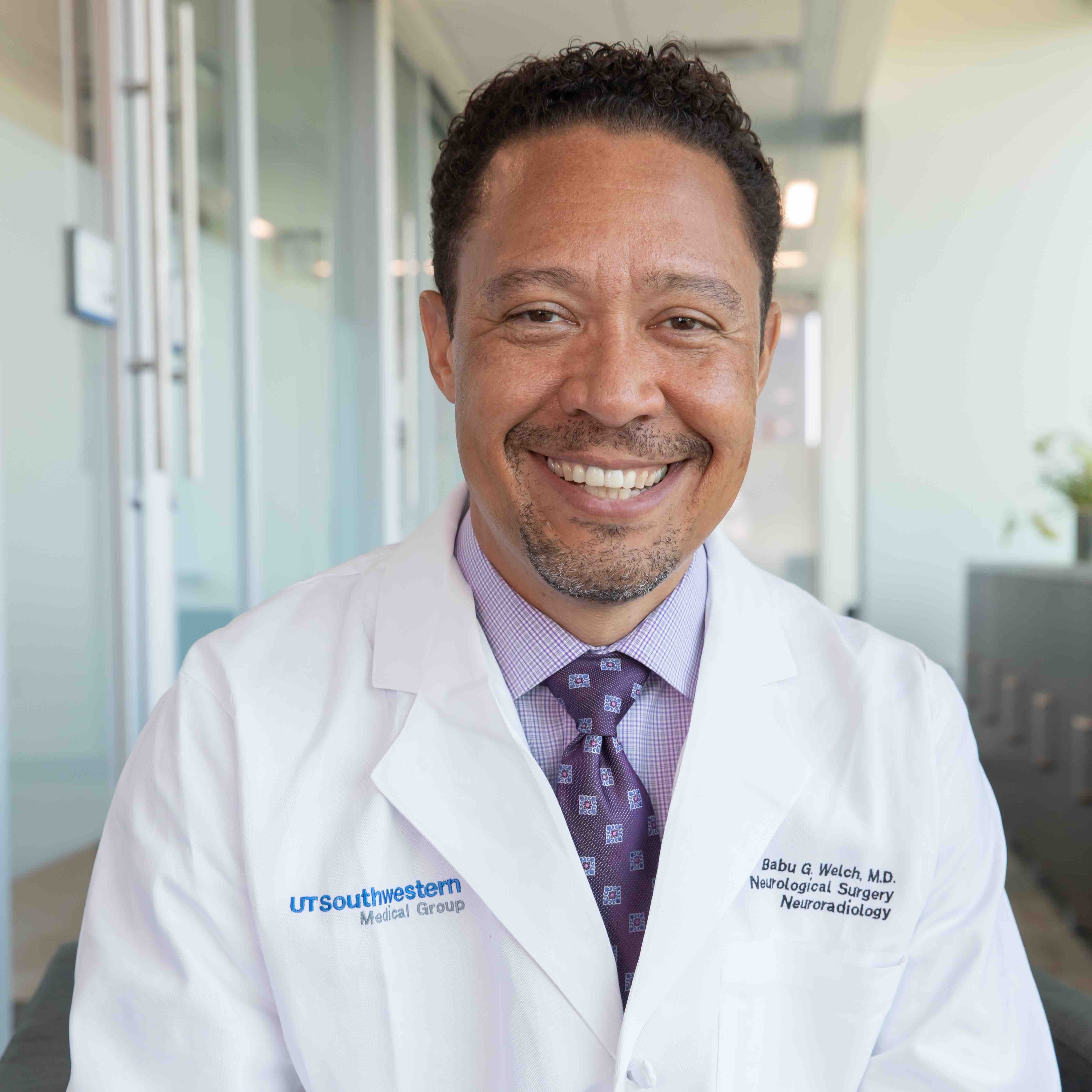
Babu Welch MD
At UT Southwestern Medical Center, stroke rehabilitation is integrated into our unique “cerebrovascular culture” that spans the continuum of moyamoya disease and stroke recovery.
As a regional referral center for cerebrovascular diseases, our team brings decades of multidisciplinary expertise in surgery, imaging, outpatient rehabilitation, and inpatient rehabilitation – a critical bridge between acute stabilization and long-term functional recovery.
Paige Montgomery, a patient referred to UT Southwestern, is a prime example of how our inpatient rehabilitation program can help patients restore their strength, mobility, cognition, confidence, and independence after a neurological event.
Paige’s story: Moyamoya-related stroke
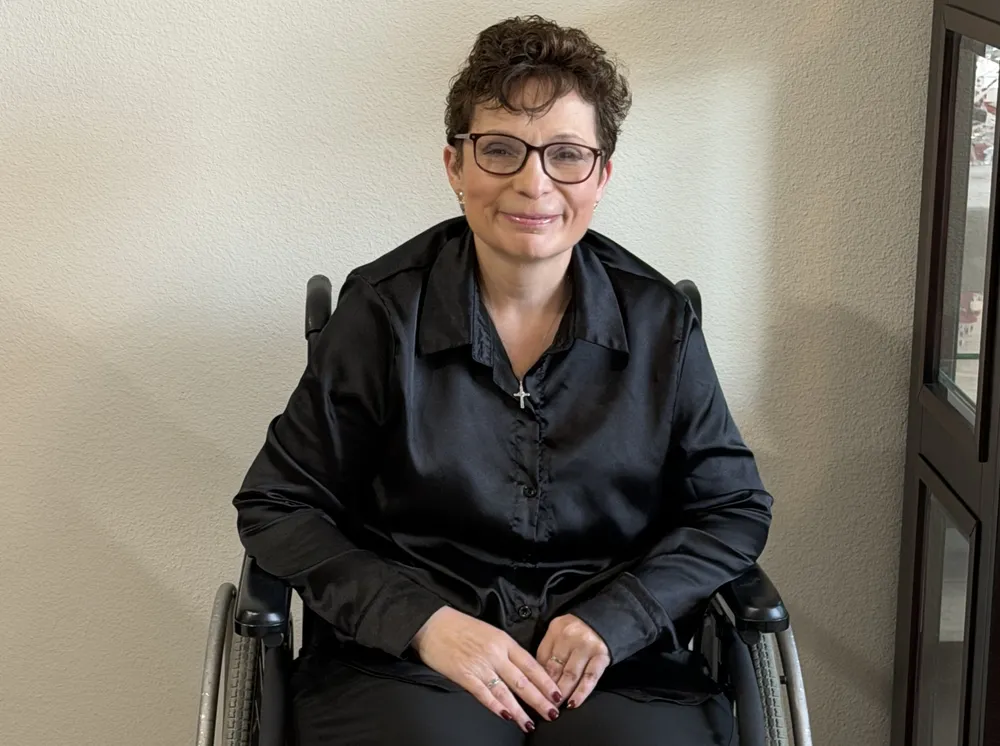
Paige Montgomery
After being admitted to a local hospital for what felt like a severe migraine, Paige was diagnosed with a ruptured brain aneurysm that had caused a hemorrhagic stroke. The right side of her brain was bleeding from three of its four ventricles.
She was swiftly transferred to the Advanced Comprehensive Stroke Center at Zale Lipshy Pavilion – William P. Clements Jr. University Hospital at UT Southwestern, where Babu G. Welch, M.D., performed emergency brain surgery. After rounds of advanced imaging, Dr. Welch and his colleagues diagnosed Paige with moyamoya disease.
This rare cerebral vascular disorder is characterized by progressive narrowing of the carotid arteries at the base of the brain, which reduces perfusion and increases the risk of ischemic or hemorrhagic stroke. The body attempts to compensate by forming small collateral vessels, which are fragile and can rupture or become blocked, causing long-term deficits in speech, executive function, visual processing, swallowing, and mobility.
Because blood is an irritant to delicate brain tissue, recovery from a hemorrhagic stroke often requires more time than after an ischemic stroke. Paige was admitted to our inpatient rehabilitation program to begin what would be a year-long recovery journey of recovery, shared between UT Southwestern and Pate Rehab, a private rehab facility in Anna, Texas.
Why inpatient rehab is essential
Inpatient rehabilitation provides the intensity, medical oversight, and interdisciplinary care that complex neurovascular recovery often requires. The goal is to translate neurologic recovery into practical function under the guidance of rehabilitation specialists.
Prior to starting inpatient rehab, the Physical Medicine & Rehabilitation (PM&R) team assessed Paige’s baseline function and learned which barriers impacted her daily life most. For patients with moyamoya disease, the team is particularly aware of subtle neurologic changes, including:
- Difficulty following directions
- Lethargy
- New weakness
- New dysphagia
- Sensory changes
- Visual changes
- Worsening dysarthria
Recovery is rarely linear. Rehabilitation nurses, physiatrists, therapists, and consulting specialists engage with patients throughout the day, identifying changes and coordinating when additional evaluation or imaging is needed.
The most effective inpatient rehabilitation plans are personalized for individual patient needs and goals. Paige’s rehab included cognitive and physical retraining, such as:
- Practicing word recall with flashcards
- Repeating words with therapists
- Relearning dressing and bathroom independence
- Rebuilding mobility from using a wheelchair to walking with a walker
- Writing to her mother, both for emotional support and to practice forming letters
In moyamoya-related stroke, this goal-based approach must be paired with long-term cerebrovascular management, including imaging follow-up, neuropsychological assessment, and management of comorbidities.
Patients at UT Southwestern have access to state-of-the-art rehabilitation facilities and innovative technology at the recently renovated Zale Lipshy Pavilion, such as:
- A spacious musculoskeletal gymnasium, including a robotic ZeroG Gait and Balance System for large motor therapy
- An “activities of daily living” apartment where patients practice everyday tasks in a homelike setting
- Specialized rehabilitation psychology services with individual and group sessions
Collaborative care for complex moyamoya recovery
Moyamoya disease is a complicated, lifelong condition. Even after successful revascularization and functional gains through inpatient rehab, patients need continued stroke preventive care and support for the physical, cognitive, and emotional demands of living with a rare cerebrovascular diagnosis.
Managing care this complex requires a team approach and deep expertise in the nuances of moyamoya diagnoses, treatment, and rehabilitation. Reach out to our specialist team if your patient has suspected or confirmed moyamoya findings or unusual neurological patterns, such as:
- Unexplained TIAs or strokes
- Stroke at a young age without clear risk factors
- Progressive cognitive or functional changes
- Multifocal deficits during stroke recovery
UT Southwestern specialists can help you determine the next steps for your patient’s care, which may include advanced vascular imaging, neuropsychological assessment, inpatient rehab, or coordinated comorbidity management. In partnership with you, we can help to restore your patient’s function and enhance their quality of life through continued cerebrovascular care.