
Precision Brain Stimulation: Targeting the Circuits Behind Mental Health Disorders

The human brain contains more than 100 billion neurons, each capable of forming thousands of connections, creating a network of almost unimaginable complexity. Understanding how dysfunction within those networks contributes to brain and mental health disorders has long been constrained by the ability to capture and interpret information at that scale.
That is beginning to change.
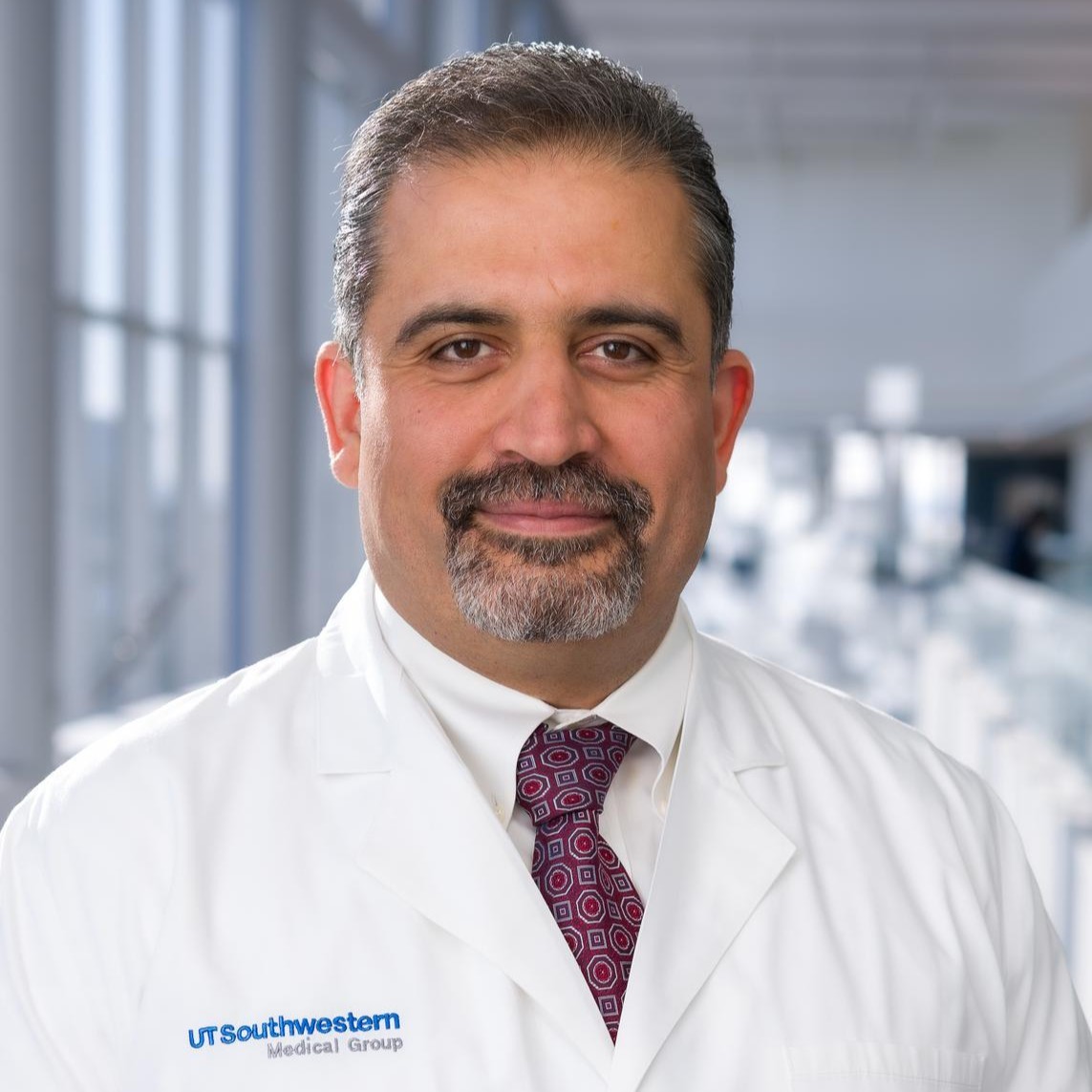
Hamed Ekhtiari, M.D.
“The number of connections that we have inside the brain is more than all the stars that we have in all the galaxies,” said Hamed Ekhtiari, M.D., Ph.D., Associate Professor of Psychiatry and Chief of the Division of Addiction Psychiatry at UT Southwestern Medical Center. “We are using advanced technology to process that overwhelming amount of information quickly, so that we can find the best target for each individual patient.”
Advances in neuroimaging, computational modeling, and artificial intelligence are giving researchers such as Dr. Ekhtiari and his team new ways to read those networks and find where treatment may have the greatest effect. Rather than viewing conditions such as depression, obsessive-compulsive disorder, post-traumatic stress disorder, and addiction solely through symptoms or individual brain regions, researchers at UT Southwestern are increasingly examining the circuits that may contribute to them.
That shift is accelerating precision brain stimulation, an emerging approach in clinical neuroscience that aims to identify and modulate specific neural circuits associated with diseases that can be difficult to treat with existing therapies.
From Chemistry to Circuits
For decades, chemistry and biochemistry have shaped how physicians understand and treat brain and mental health disorders. But chemistry represents only part of how the brain functions. Understanding disease also requires understanding the circuits through which the brain communicates and what happens when those circuits become dysfunctional.
“Until recently, we were much better at treating the chemistry of the brain than its circuitry,” Dr. Ekhtiari said. “Now our understanding of those circuits is improving quickly enough that we can begin asking a different question: ‘Can we intervene in the specific network that is contributing to a patient’s illness?’”
Earlier attempts to influence those signals were limited by how precisely physicians could identify and target the circuits involved. As a more complete picture of brain circuitry has emerged, so has the ability to intervene more selectively.
Circuit-based treatments have already demonstrated results in conditions such as depression and obsessive-compulsive disorder, with research continuing across post-traumatic stress disorder, addiction, and other disorders.
For Dr. Ekhtiari, that potential is particularly important for patients who continue to suffer despite established treatments. For example, a patient may receive a lifesaving liver transplant after alcohol-related liver disease, but still struggle with alcohol use disorder. A patient undergoing treatment for head and neck cancer may still be unable to stop smoking.
Medication and behavioral therapies remain essential, but they do not work sufficiently for every patient. At UT Southwestern, expertise in addiction psychiatry, interventional psychiatry, brain imaging, brain stimulation, and complex medical care creates opportunities to bring those disciplines together for patients whose needs cross specialties.
The human brain contains more than 100 billion neurons, each capable of forming thousands of connections, creating a network of almost unimaginable complexity. Understanding how dysfunction within those networks contributes to brain and mental health disorders has long been constrained by the ability to capture and interpret information at that scale.
Further Reading
Learn more about Dr. Ekhtiari’s research:
Artificial Intelligence for Precision Brain Stimulation: From Neuroimaging to Foundation Models and Virtual Brains, published June 9, 2026. Click here to read the full article.
The Path to Personalization
One of the central challenges is determining where within the brain’s vast network to target. Computational models can analyze brain circuits to identify patterns and potential treatment areas, while artificial intelligence could help process that information at greater scale and speed. UT Southwestern is also adding robotic technology designed to improve the precision with which brain circuits can be targeted.
While personalization remains a goal rather than standard clinical practice, these tools could eventually move precision brain stimulation beyond established circuit maps toward treatments tailored to an individual patient’s brain.
Researchers are also exploring whether they could eventually test an intervention virtually before treating a patient by mapping a digital version of the patient’s brain – a digital brain twin.
“Before even testing a circuit-based therapeutic, we can make a digital twin of your brain,” Dr. Ekhtiari said. “We can then test the intervention and try different ways of stimulating the circuit to find the best approach before using it in the patient.”
Brain imaging could add another layer of precision through circuit-based biomarkers. Dr. Ekhtiari compares the idea to blood pressure: a measurable marker that helps physicians understand what is happening and whether treatment is working.
Together, these tools could eventually help answer two important questions: Where should physicians intervene, and how might this particular patient respond?
From Promise to Practice
For all the technology involved, Dr. Ekhtiari’s interest in precision brain stimulation ultimately comes back to patients who have exhausted other options.
“I have seen patients with very hard-to-treat depression who had not responded to other treatments respond to these advanced technologies,” Dr. Ekhtiari said. “As a physician, I think about whether I would be comfortable providing a treatment to my own family and these are all options I would be happy to provide to mine.”
The opportunity now is to better determine who may benefit and how these approaches can be increasingly personalized. But advancing the technology is only part of the challenge. Specialized equipment, trained clinicians, insurance coverage and health system infrastructure will all influence whether an effective intervention moves from research into routine care – and ultimately become practical, affordable, accessible and scalable.
“The discoveries are happening and the technologies are promising, but we also have to think about implementation,” Dr. Ekhtiari said.
Turning that promise into better patient care will require progress beyond the technology itself – and continued collaboration across disciplines. At UT Southwestern, experts in psychiatry, neurology, neurosurgery, engineering and other fields are working together to advance these approaches and address the practical questions involved in translating them into clinical care, both today and in the future.
“I’m confident that within my career, the multidisciplinary work happening across these fields will revolutionize how we understand and treat brain and mental health disorders.”