
Interventional Psychiatry Division Chief has crossed globe to research treatments

Andre Russowsky Brunoni, M.D., Ph.D., took a winding, multi-decade path to becoming the Division Chief for Interventional Psychiatry at UT Southwestern Medical Center – a journey spanning research in three countries and a shift in the way he initially looked at health care.
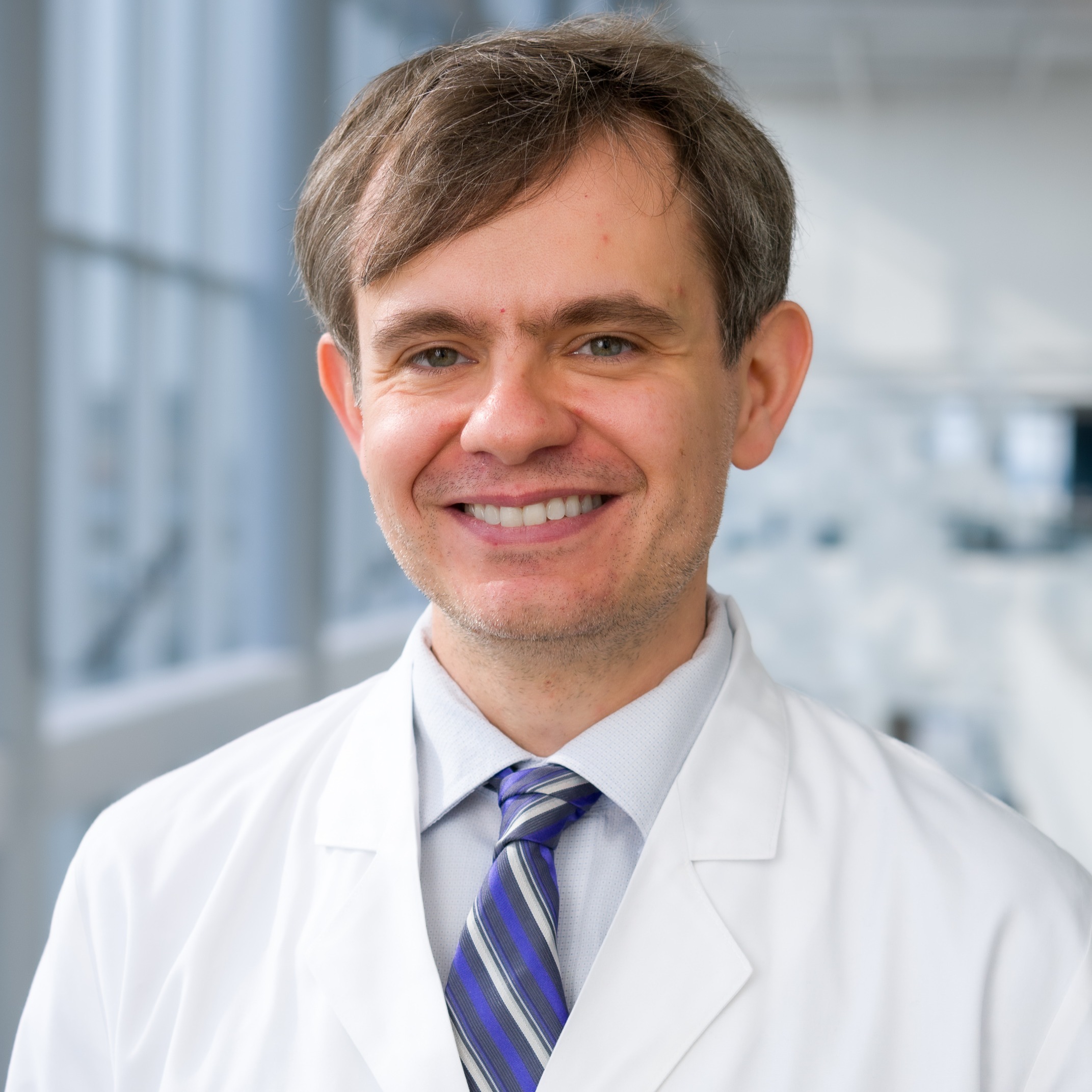
Andre Russowsky Brunoni, M.D., Ph.D.
While he has always been interested in mental disorders, he originally planned to pursue a career in internal medicine.
“I realized that when we see patients in primary care, a significant portion of them have mental conditions that we could ameliorate,” Dr. Brunoni said. “We could have a significant impact in their lives using antidepressant drugs or through counseling. And in some cases, I realized that this was even more impactful than physical treatments.”
Dr. Brunoni explained that managing chronic conditions is often invisible to the patient; someone taking medication for high blood pressure, for example, might not feel any different day to day, even though the treatment is successfully protecting their long-term health.
“They will use medications for many years, but this doesn't really change their lives per se,” he said. “But if there is someone with depression, then we can start an antidepressant drug or do counseling, improving their lives faster. So, I realized that this was something that could really make a difference.”
His perspective shifted further when he began studying alternatives to antidepressants. By focusing on brain stimulation treatments, he discovered therapies that could manage depression without the burden of typical medication side effects. Interventional psychiatry at UT Southwestern focuses on the development and use of novel interventions to treat brain disorders rather than a strict reliance on traditional pharmacological therapies or traditional psychotherapy – although many of the individuals he sees have already undergone those treatments.
Three primary treatment modalities dominate the field of interventional psychiatry: transcranial magnetic stimulation (TMS), ketamine therapies, and electroconvulsive therapy (ECT). These three treatments are the main options that psychiatrists have for more complex, treatment-resistant conditions, though emerging therapies such as magnetic seizure therapy (MST) and deep brain stimulation (DBS) continue to expand the field.
Of the three, Dr. Brunoni works most with TMS and has traveled from his home country of Brazil to the United States and Germany to work with some of the leading minds in the development of the treatment. Part of his Ph.D. work took him to Harvard Medical School, where he immersed himself in brain stimulation clinical trials alongside Felipe Fregni, M.D., Ph.D., a renowned pioneer in the field of neuromodulation. This pivotal period around 2012 provided Dr. Brunoni with a foundational understanding of brain stimulation clinical research and its underlying methodologies.
He then spent two years in Germany collaborating with top researchers in Europe and visiting different labs and universities. Most of his career has been in Brazil, where he used what he learned abroad to launch clinical trials, pioneering novel treatments and deepening the medical community’s understanding of how these interventions work.
One of his team’s primary focuses was accelerated theta burst stimulation, which delivers treatment over one week instead of six. His team has been at the forefront of its development over the past five years and calls it a “game changer.”
Dr. Brunoni returned to the U.S. in 2025 to assume his role as Division Chief at UT Southwestern. In this position, he continues to develop novel therapies, including expanding the application of TMS beyond major depressive disorder. He collaborates regularly on with the Addiction Division and anticipates future joint ventures evaluating the efficacy of brain stimulation on post-traumatic stress disorder. He is also helping refine the use of neuronavigation – using a patient’s MRI to guide placement of the magnetic coils used in the procedure – to make the use of TMS and its associated treatments more precise.
With nearly 500 peer-reviewed articles and more than 50,000 citations to his name, Dr. Brunoni has invested decades into finding ways to help patients achieve fast and lasting relief and sharing that research with the world.
“I have seen patients who had lost hope after years of failed treatments respond within weeks to brain stimulation,” he said. “That is what keeps me in this field – the possibility that the next trial we run will be the one that changes someone’s life.”