
From Patient Selection to Recovery: Creating a Surgical Roadmap for Scoliosis and Spinal Deformities

Adult scoliosis and spinal deformities are among the most common conditions treated in spine care – and among the most complex. While surgery can help correct deformities and alleviate many symptoms, most patients needing a procedure are older, have multiple medical conditions, and often require more extensive reconstruction than their younger counterparts.
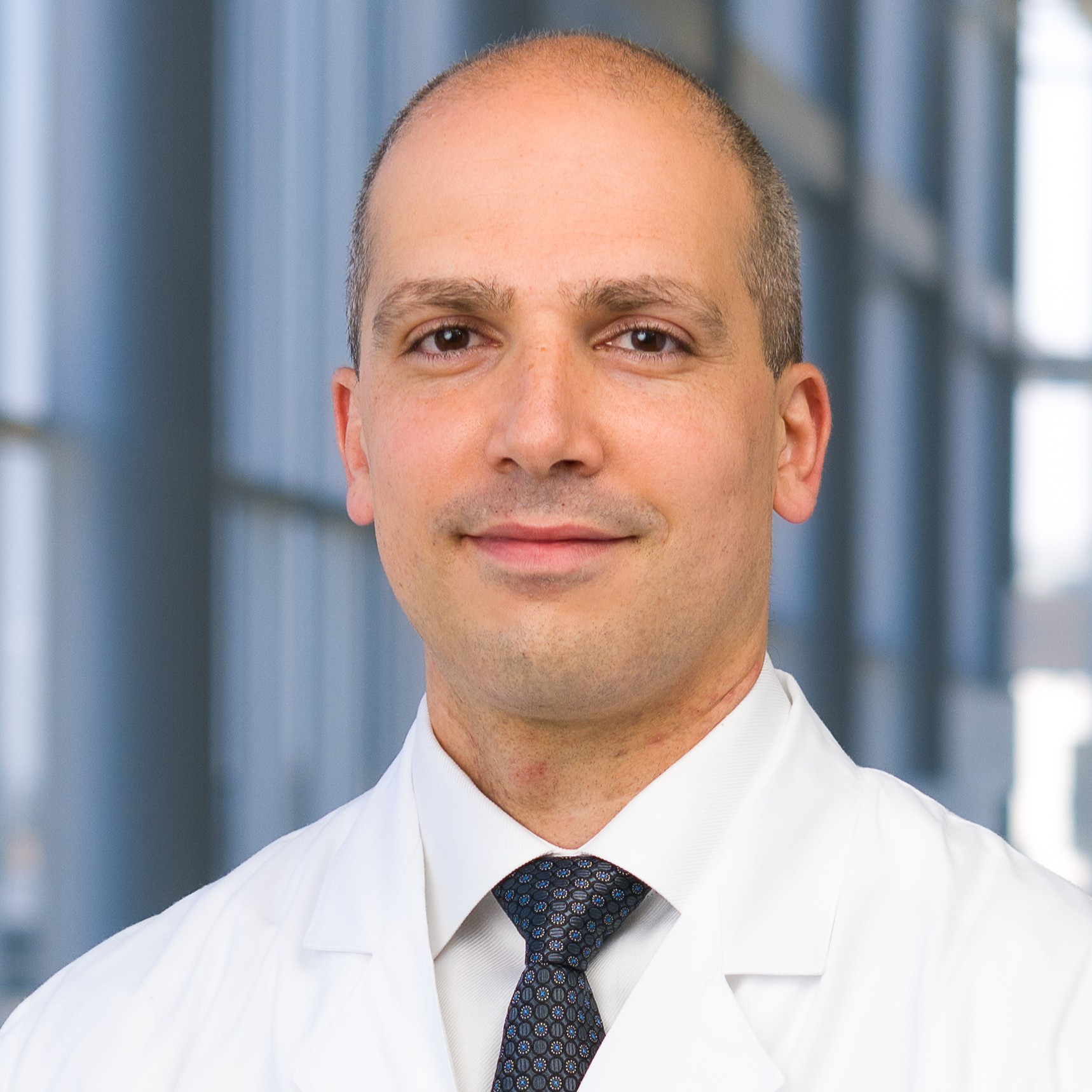
Salah Aoun, M.D.
This means outcomes depend on the patient’s full treatment journey, not just the technical execution in the operating room. Unfortunately, what that journey looks like tends to vary across institutions and providers.
To help create a more consistent, evidence-based approach, spine surgeons such as Salah Aoun, M.D., Associate Professor of Neurological Surgery at UT Southwestern’s Spine Center, and his colleagues have examined the treatment practices influencing every stage of spinal deformity care and long-term results. By researching surgical outcomes through factors ranging from patient selection and blood management to enhanced recovery protocols and opioid reduction, Dr. Aoun and colleagues are helping establish consistent standards of care for patients undergoing scoliosis and spinal deformity surgery.
The right procedure for the right patient
One of the most important steps in the surgical roadmap is determining whether surgery is appropriate for a patient in the first place. Not every patient with spinal deformity requires surgery, and not every surgical candidate requires major reconstruction.
“Nothing is worse than scoliosis surgery on the wrong patient,” says Dr. Aoun. “That is how you make people miserable, and that’s how spine surgery gains a bad reputation over time.”
Many patients can see meaningful relief for their symptoms from minimally invasive procedures or nonsurgical treatments. Reserving extensive reconstruction for patients with severe pain, functional limitations, or worsening deformity helps minimize risk and sets realistic expectations. For the right patient, making those decisions thoughtfully can be transformative.
“When it’s the correct patient for surgery,” adds Dr. Aoun, “those patients are often incredibly grateful, because it can make such a dramatic difference in their quality of life.”
Multidisciplinary approach to risk
Spinal deformities come in many forms and rarely have a single solution, meaning effective treatment planning requires expertise from several specialties. One of the foundations of the Spine Center’s approach to scoliosis and spinal deformity is its multidisciplinary clinic, where physicians from a variety of specialties work together to evaluate and treat patients all under one roof.
Whether a patient is seen on the main campus or at a regional UTSW clinic, spine surgeons work alongside pain management physicians, physical medicine and rehabilitation specialists, and orthopedic surgeons. This allows physicians to collaborate quickly, identify the underlying source of a patient’s symptoms, and more effectively match the right treatment to the right patient.
“It really takes a team of people to diagnose the issue and be able to offer the small and the large treatments for it,” Dr. Aoun says. “It’s that one-stop-shop expertise that allows subspecialties to cross-pollinate.”
Categorizing patients by complexity
Because spinal conditions and procedures vary widely in complexity, UT Southwestern’s surgical roadmap categorizes patients into tiers based on their condition, planned procedure, and overall health. This risk-based approach helps guide treatment planning and determine the level of preparation and support needed before surgery. A disc replacement for an otherwise healthy adult, for example, might fall into a lower tier, while a scoliosis correction in an elderly patient with multiple comorbidities could fall into one of the higher tiers.
“When patients come in, we follow a protocol,” Dr. Aoun says. “If you come in for any kind of spinal surgery, not just scoliosis, you get divided into tiers of complexity.”
At the lowest tiers, patients may only require a preoperative evaluation, while the highest tiers may involve further evaluations with other specialists before moving ahead with surgery. By streamlining how patients are evaluated, the physician team can provide more consistent care and create a more predictable path for treatment and recovery.
Enhanced recovery after surgery (ERAS) across the entire patient journey
The heart of UT Southwestern’s surgical roadmap for scoliosis and spine deformities is its ERAS program, which outlines a pathway at all stages of a spine deformity patient’s treatment to optimize their outcomes. ERAS standards create a more coordinated experience for patients, preparing them for their complex spine surgery every step of the way. Patients are prepared well before surgery with a clear understanding of what to expect during recovery, including mobility goals, rehabilitation milestones, and the role they will play in their own care.
Optimizing the patient’s physical health in advance of the procedure plays a large role in reducing risks that could affect surgery as well as recovery afterward. A patient may be referred to a smoking cessation program, a nutritional consult, or a presurgery rehabilitation program. The goal is to improve the patient’s overall endurance and functionality, so the patient is better prepared physically for postoperative recovery.
In a study of adults undergoing complex spinal deformity surgery, Dr. Aoun and colleagues found that patients treated through an ERAS pathway experienced fewer postoperative complications and lower 90-day readmission rates than those treated before the standards were implemented. These findings further reinforce how a structured, multidisciplinary approach has benefits that extend beyond the operating room.
Addressing mental readiness before surgery
In addition to physical considerations, the ERAS approach also takes into account the mental toll a major surgery can have on the patient. Many patients have lived with chronic pain for months or years before their first consultation with a spine specialist, putting them at risk for depression, anxiety, or other mental health challenges that can affect recovery.
“What you don’t want to do is operate on someone who is too depressed to participate in their own care after surgery,” says Dr. Aoun. “Then they could sit in bed, and their health might deteriorate even further.”
ERAS protocols aim to reduce stress by providing patients with clear expectations for their surgical journey so they can approach their treatment and recovery with greater confidence.
As part of the preparation process, all patients meet with a psychologist for a behavioral health assessment before undergoing a spinal procedure. These evaluations help identify factors that could affect the patient’s recovery, ensure understanding of the goals and expectations of treatment, and confirm the patient is prepared to actively follow through with postoperative care and rehabilitation.
Optimizing outcomes for elderly patients
Older adults tend to face additional risks during complex spine surgery, making preoperative evaluations an especially important part of their care. For this reason, elderly patients also meet with a geriatric specialist from UT Southwestern’s Perioperative Optimization of Senior Health (POSH) Program for clearance before any type of spinal surgery. The POSH team evaluates age-related factors that could increase the risk of complications, including cognitive impairment, medication use, chronic health conditions, nutrition, and functional limitations. Based on the evaluation, the team may recommend medication adjustments, additional testing, physical therapy, nutrition support, or other interventions to help optimize the patient’s health before surgery.
They then work closely with the surgeon and anesthesia team to develop a personalized surgical and anesthetic plan aimed at reducing complications, particularly postoperative confusion or delirium, and supporting a safer recovery. After surgery, POSH specialists continue to help manage medical conditions and assist with discharge planning and the transition to home or rehabilitation care. This collaborative approach helps improve surgical outcomes and promotes safer recovery for older adults.
Minimizing blood transfusions with evidence-based techniques
Managing blood loss is an important part of scoliosis and spinal deformity surgery, making transfusion practices a key area for standardization. In a meta-analysis published by Dr. Aoun and colleagues at UT Southwestern, the team found that patients receiving blood transfusions during adult spine surgery experienced:
- Higher rates of superficial and deep surgical site infections
- Higher rates of systemic and localized infections, including sepsis and pulmonary and urinary infections
- More cardiovascular complications
- Longer hospital stays
- Greater 30-day readmission rates
- Greater likelihood of follow-up procedures
- Increased morbidity
Based on their findings, the authors recommend setting consistent guidelines for spine procedures, rather than relying on standards developed for other patient populations. Most existing blood transfusion guidelines were created based on data from intensive care unit patients, for example. The goal is to minimize unnecessary transfusions while maintaining safe hemoglobin levels through the surgical journey, thereby reducing complications and improving outcomes. Since transfusions carry additional risks, surgeons may also need to weigh the benefits of the surgery with the possibility of transfusion-related complications.
The Spine Center has already incorporated several proven blood-conservation strategies designed to reduce the need for transfusions during complex spinal deformity procedures. One of those approaches is the use of tranexamic acid (TXA), a medication that helps stabilize blood clots and reduce surgical bleeding. When combined with cell-saver technology, which collects and returns a patient’s own blood during surgery, and other blood-management protocols, surgeons can significantly reduce blood loss and lower the likelihood a patient will require a transfusion.
“We can perform scoliosis surgery with very minimal blood loss," Dr. Aoun says. “Patients may receive two to four units of transfused blood instead of 12, and we use a cell saver to recycle their blood, so they get their own blood back.”
Standardized surgical workflows
Any surgical standard is only as effective as its consistency. As spinal deformity procedures become increasingly complex, standardized surgical workflows play an important role in improving efficiency and supporting evidence-based practices. Rather than assembling a different operating room team for each case, the Spine Center’s complex deformity procedures are performed by physicians, anesthesiologists, nurses, and surgical technicians who routinely work together and specialize in spine surgery.
“We have very capable people who do the same thing over and over again and plan ahead,” says Dr. Aoun. “When you go to the OR, there are only people who do spine cases, and when you do a scoliosis procedure, there are scrub techs who only do scoliosis cases.”
This high-volume consistency helps ensure established protocols are implemented the same way for every patient. From anesthesia planning and blood management strategies to operating room coordination and postoperative expectations, dedicated teams can anticipate challenges, improve communication, and create a more predictable surgical experience.
Recovery and rehab programs designed for complex spine patients
A spine patient’s recovery begins immediately after their procedure, providing interventions for potential complications as soon as possible and reducing the likelihood of readmission. These include deep vein thrombosis (DVT) prophylaxis, nutrition implementation, and early mobilization. The goal is to treat common postoperative complications before they arise, rather than reacting to them later. Promoting circulation, supporting healthy nutrition, and encouraging patients to move early reduces issues such as blood clots, low energy, constipation, and urinary retention, which can all prolong hospital stays.
The multidisciplinary expertise that helped plan a patient’s surgery also follows the patient directly from the OR to aftercare. When patients enter the Spine Center’s scoliosis-specific rehab programs, they’ll visit with clinicians who routinely care for patients recovering from complex spine procedure, such as physical therapists.
“Our physical therapists know what to do and, more importantly, what not to do for these patients,” Dr. Aoun says. “They aren’t going to try to make a fusion patient do an exercise that might fracture the hardware and make them have to get the whole procedure again.”
For Dr. Aoun, recovery and rehabilitation are not separate from surgery but essential components of the overall surgical roadmap.
Pain management without opioids
Regardless of the spinal deformity procedure a patient undergoes, recovery often comes down to pain management. Traditional pain-control strategies have frequently relied on opioids, which can effectively reduce discomfort in the moment but may also slow long-term recovery and increase the risk of narcotics dependence.
To address this challenge, the Spine Center has begun moving away from opioid-based strategies, particularly during and immediately after surgery. The goal is to provide effective pain relief while helping patients become mobile sooner, allowing them to participate more actively in their rehabilitation and reduce their reliance on narcotic medications in the process.
For complex spine surgeries, Dr. Aoun and his colleagues have incorporated a long-lasting epidural anesthetic, typically used in joint replacement procedures, into their pain management approach.
“We’ve shown that it not only improves quality of care after surgery, but it decreases hospital stay, decreases narcotic intake in the hospital, and decreases renewal of narcotic prescriptions in the six months following surgery,” Dr. Aoun says. “So now you’re combating opioid influence in this patient.”
More recently, the spine team has begun trialing a non-opioid oral pain medication that was approved by the FDA last year with highly promising results. “You wouldn’t believe it,” says Dr. Aoun. “I’ll see a patient get a fusion from T4 to the pelvis. They’ll come in two weeks later and just want that medication – no narcotics.” While additional research is ongoing, Dr. Aoun believes medications such as this represent a significant step forward in opioid-free pain management for spine patients.
Reducing opioid use can have effects beyond pain control alone. By keeping pain manageable without relying heavily on narcotics, patients are often able to walk sooner after surgery and participate more fully in rehabilitation. Early mobilization can help lower the risk of complications such as blood clots, constipation, urinary retention, and wound infections, supporting the broader goals of ERAS protocols. As a result, pain management has become more than a matter of patient comfort; it is increasingly viewed as an important component of recovery and long-term outcomes.
Building better outcomes for scoliosis and spinal deformity surgery
In the past, scoliosis and spinal deformity surgery focused on the technical aspects of correcting a patient’s spine for the most positive outcomes. While surgical technique is still highly important, surgeons are increasingly recognizing that a patient’s outcomes depend on far more than the operation itself. From selecting patients for surgery to standards in the operating room and rehabilitation protocols, every stage of treatment can influence a patient’s recovery and long-term outcome.
Through research and collaboration across multiple specialties, Dr. Aoun and his colleagues are helping establish more consistent standards for patients undergoing scoliosis and spinal deformity surgery. The goal is not to replace clinical judgment, but to create a roadmap that helps ensure patients receive the right treatment, the right support, and the right recovery plan at every step of their care journey.
“There are few places pushing the transfusion, ERAS, delirium, and narcotics data the way we are in the Spine Center. It all stems from the idea of all these specialists cooperating to come up with ideas, and I think that really makes us special,” says Dr. Aoun.